

By Emily Hsi (UC Los Angeles) studied abroad at the National University of Singapore.
When I first decided to study abroad, all I knew was that I wanted to be in Asia.
As a Chinese American born and raised in California, I had my fair share of identity crises. I was raised in a city with a negligible Asian population, but grew up immersed in Chinese culture by my two immigrant parents. Through them, I developed a deep appreciation for my heritage. My parents, though first-generation immigrants, moved to America when they were young, and so never developed the fluency in Mandarin to pass on to my brother and me. Eventually, I ended up at UCLA, a university known for its prominent Asian American population.
I never went through some of the struggles that other Chinese American kids have reported, like wishing that I were white. In fact, I never felt Chinese enough. Having never gone through the “stereotypical” life events that other Chinese Americans did — Kumon, Saturday Chinese school, trips to China to visit family — I always felt personally attacked by the term banana: yellow on the outside, white on the inside.
I had a feeling that loving my heritage would never be enough, and I often wondered how different I would be if I were born in China. If I could speak the language, would I still feel as though I had to convince others of my Asianness? If I visited the mainland, would I understand their jokes and cultural nuances, the fleeting references I see online that I have never comprehended?
Losing my American Label (and Finding it Again)
I decided that going to Asia would fix me, filling a hole in me, one inherently driven by where I had been born. The only other time I’d been to the continent was when I was five years old, and the flashes of memory I have were so minimal I could have dreamed them up. Studying abroad was the perfect opportunity.
China was immediately out of the question because, try as I might, I knew I would struggle there if I couldn’t speak the language.
That left only a few countries where English is an established language, and I eventually landed on Singapore for its high Chinese population.
So it was set.
I decided on Singapore the summer before I started at UCLA, applied during my first year, and landed in Southeast Asia in the beginning of my second year.
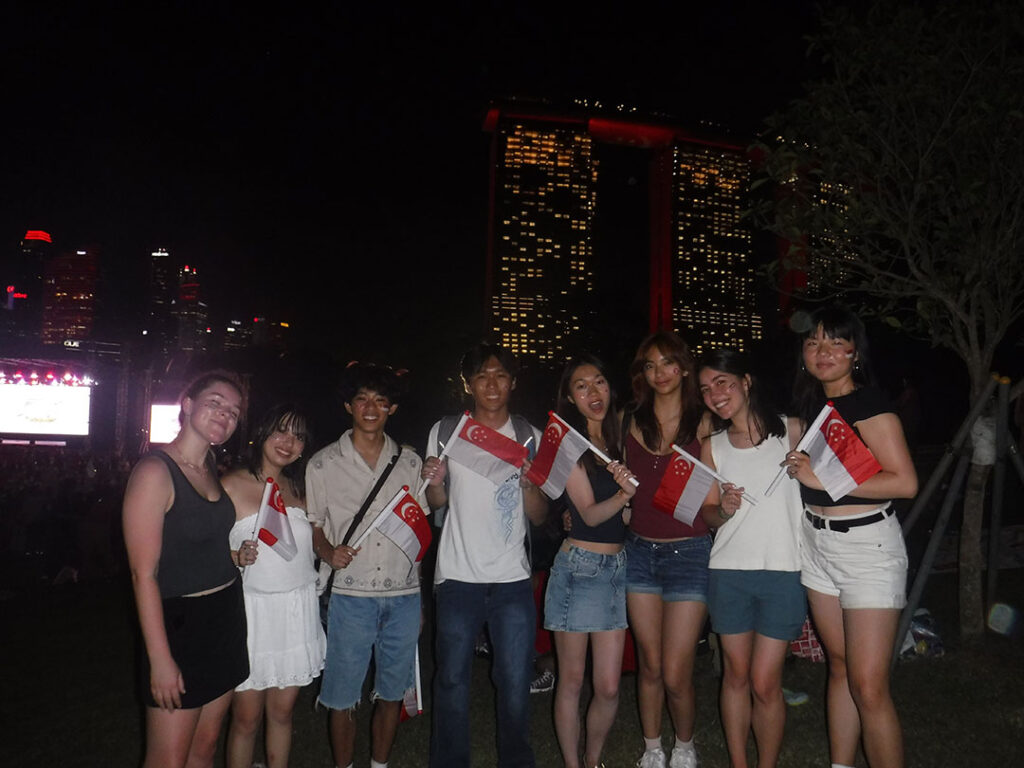
At first, I envisioned my American-ness as something everyone could see just by looking at me. I dressed differently, wore a different makeup style, and the moment I opened my mouth, I knew my accent would speak for me. I remember being mortally afraid of ordering at a hawker center alone for the first time, terrified that the uncles and aunties would speak to me in Chinese and I would have to backtrack.
Spoiler alert: they did speak to me in Chinese.
Learning to Embrace the In-between
My classmates all turned to look at me when I introduced myself as an exchange student. In the stores, I had to fumble with cash because credit cards aren’t the primary method of payment; PayNow is. I dreaded all these little mishaps that reminded me that I wasn’t one of them.
For years, I had suffered a curious desire to go back, to return, even though I had nowhere to come back to. I had lived in California my entire life; how can I go back to Asia if I never belonged there in the first place? Now that I was there, I felt out of tune among a seamlessly orchestrated system of cultural belonging.
I wasn’t one of them. That quickly became clear, and I never could become someone I wasn’t. I could not reach within myself and fix what I viewed as faulty circuitry because, try as I might, I had been raised and wired as a Chinese American.
But did that even matter?
All along, I had been afraid that because I was an American citizen, it meant that I had to prove my Asian-ness to be recognized for my ethnic heritage. But after being in Singapore, even in the first few weeks, I quickly realized that there was no standard for what it means to be Asian.
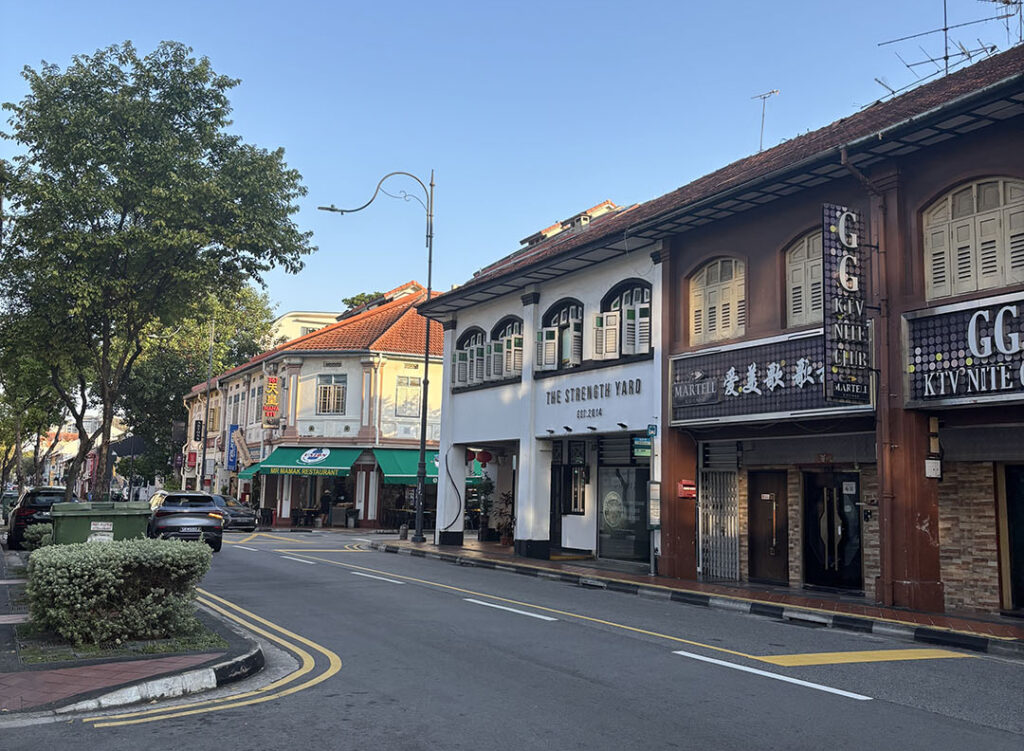
Singapore has four national languages: English, Mandarin, Malay, and Tamil. Its largest ethnic group is Chinese, but the entire country is steeped in influences from its neighboring countries, Malaysia and Indonesia, and it boasts a significant Indian population. It is incredibly diverse. All the signs are in English, the hawker stall owners greet you in rapid-fire Chinese, and their slang borrows from Malaysia. Even Singaporean cuisine is impossible to pinpoint, being made up of Hainanese chicken rice, Malaysian nasi lemak, Indonesian satay, and Indian prata and curry.
Growth in the Grappling
My conception of what it meant to be Asian, which, over time, had become synonymous with singularity, was shattered in the face of the Singaporean national identity. I realized that I never had to pick between Chinese and American. My American-ness did not define me during my time in Asia; in fact, nothing did. Being an exchange student, I could drift through the country undefined and without consequence, because my only obligation was to learn.
This realization could never have been taught in the classroom. I have been told many times over the years that I never had to qualify my identity, but it wasn’t until living in Asia that I could internalize it.
I didn’t learn this only in Singapore, either. Being abroad also allowed me to travel outside of the country, and my most notable trip was during recess week before midterms, when I traveled to Hong Kong, Shenzhen, and Taipei.
Studying in Singapore gave me the affordability of speaking English, but being in these three different regions, each heavily dependent on Chinese, threw me a new curveball. I survived on either fragments of English, the few Mandarin phrases in my pocket, and Google Translate. The latter wasn’t even especially helpful; when I visited China, a taxi driver laughed in my face for being dependent on a translation app.
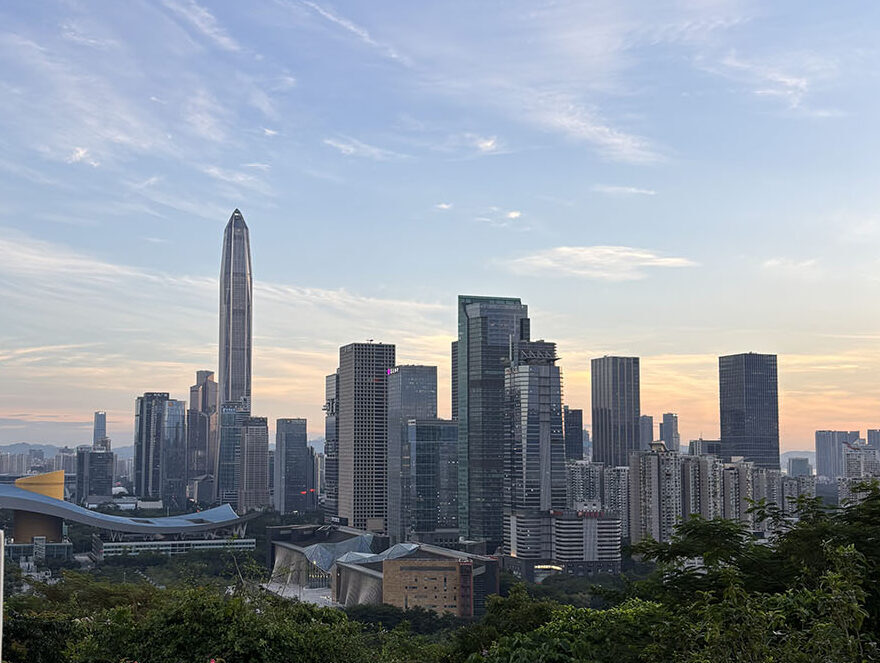
But my trip did not end in the moment that was ostensibly a rejection of my American-ness. I saw one of the most beautiful sunsets that night in Shenzhen, surrounded by people whose language I did not share, but who wore the same face as me.
My Heritage is My Own
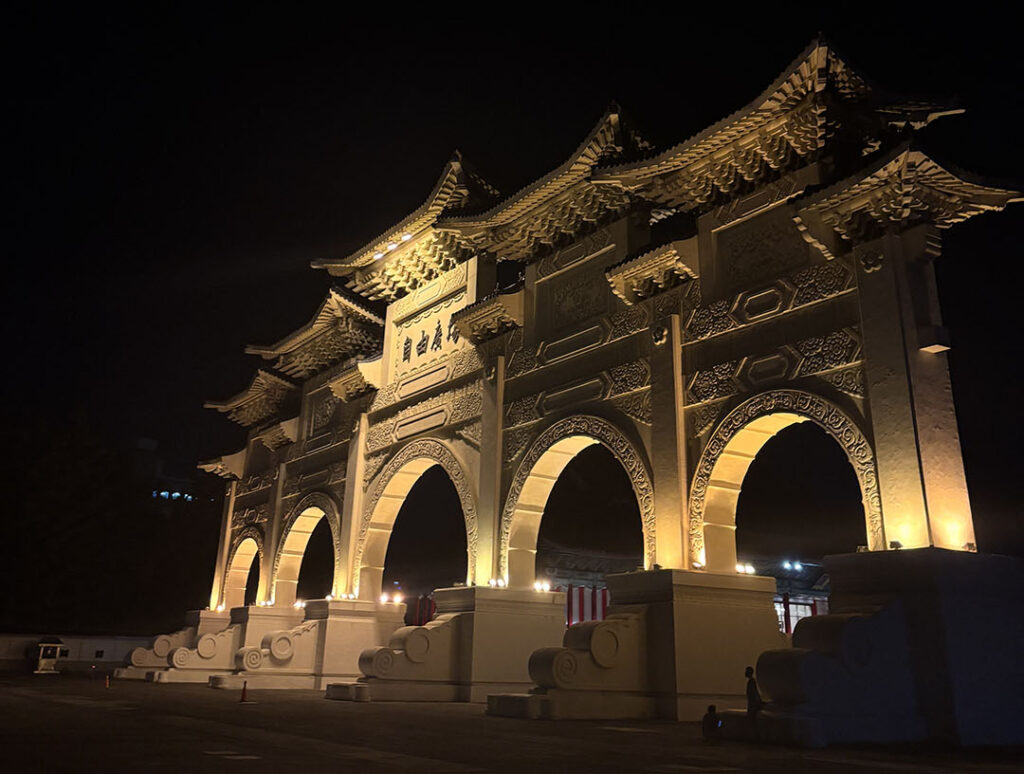
It was made abundantly clear that being from California shifted the terms of what it meant to be Chinese. Yet it did not erase my heritage. In Hong Kong, I ate the same dim sum dishes I grew up dining on with my family. In China, I spoke my sparse Mandarin for the first time with people who were not my family. In Taiwan, I walked the streets, knowing it was the country my mother grew up in.
And in Singapore, I was surrounded by such a rich blend of people that I knew I had to fit in by being a little bit different from everybody else. Asia, a continent that had once seemed so far, was in fact small enough for me to cherish the fact that it didn’t matter that I was Chinese American instead of Singaporean Chinese, or mainland Chinese, or Malaysian Chinese, or any of the many variants of people. What we shared was this vast world.
Returning to America will not diminish any of the cultural exploration I achieved during my time in Singapore and elsewhere. In fact, I am excited for my plane to land at LAX, where I now know I will belong regardless of the shape of my identity. Without fear or shame, I know who I am: Chinese American.



0 Comments