
by Ramil Mercado
from UC Berkeley to Southeast Asia and Argentina
Taking any significant journey has the potential to transform you, but you don’t need to leave it to accident or luck. As a person of color and a person who is queer-identified, I can tell you that the choices you make when choosing to study abroad form the foundation of your experience.
Here are my most important tips for creating a meaningful journey.
1. Know yourself and your limits

The social and cultural landscape you’ll navigate is going to be different from the one you’re comfortable with at home. You may wonder how you’ll adapt to meeting lots of new people in a short period of time. Or how you’ll feel if you find yourself the only person of a minority group while abroad. Consider how comfortable you are with handling microaggressions related to your identity. How do you feel about modifying your looks or behavior to meet local expectations?
As a person of color, I experienced greater scrutiny in Argentina than my white-passing classmates and faced plenty of microaggressions. At times, it was frustrating and exhausting, but it was also fascinating and illuminating , as it showed me how I could be perceived so differently depending on where I am and who is interacting with me.
2. Research the location’s view on your identity

Politics, history, and culture influence the ways in which your identity might be perceived in another location. Review social trends and talk with someone with a similar identity who has lived or studied abroad in the location you’re considering.
The experience of someone who’s queer-identified living and studying in Singapore compared with the Philippines or London, for example, is going to be vastly different. There may be things you would openly express in one location that may be in your interest not to in another.
3. Adopt a challenge mindset

No matter how much preparation you put in, you’ll never be completely prepared to experience something new. The key is to intentionally adopt a mindset that is open and curious. A challenge mindset sees that challenges are not bad, and are worth seeking out and necessary because they reveal things that comfort and complacency do not.
I was denied service in a grocery store once, but the others I traveled with were not, even though we all spoke with American accents. It felt weird, and it was a shocking experience. Even though nothing can truly prepare you for surprises like these, the right mindset can help you take it as a learning experience and turn an otherwise difficult and strange experience into a lesson that adds a layer of complexity to the place that you’re visiting.
4. Find your community(ies) abroad

When you’re at home, you have a community filled with resources, places to go, and people to talk with—you’ll want to have similar support when you’re abroad. Tools like online searches and social media can help you find the supportive communities you know you’ll want when you arrive.
I’m queer-identified, but I’m also Southeast Asian, Filipino, and Latino—Mexican and Puerto Rican. Before I go to any country, I always try to locate the queer community, Filipino community, or Latinx community because it helps me transition into my host country more easily. When you’re experiencing and learning from a new culture, having a sense of familiarity in any capacity will help you adjust and give you a sense of safety.
5. Seek out friends that complement your identity(ies)
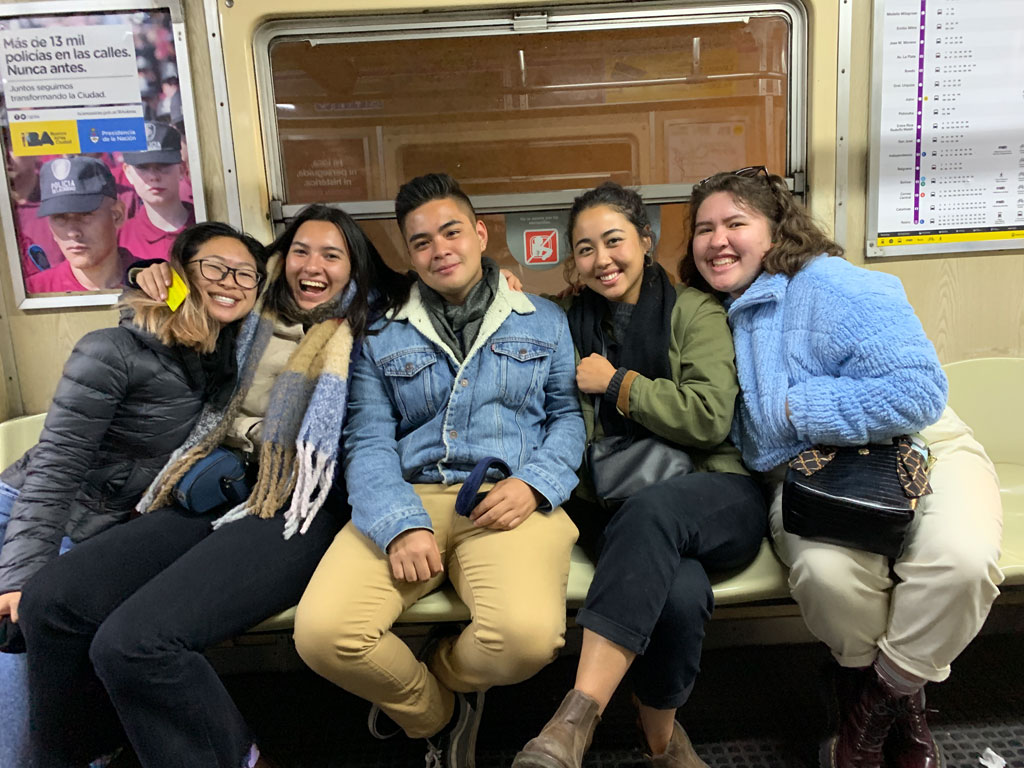
Finding other people—both local and international—that match as well as complement your identities can provide another picture of the host country and culture in ways you might not expect.
When I was in Singapore, I befriended a queer-identified, Muslim Malay Singaporean, and we became good friends during my time abroad. I also became good friends with a queer-identified Indian Singaporean. They showed me another side of Singapore that wouldn’t typically be seen, and listening to their experiences growing up in the country and navigating their own identities provided a more nuanced picture of Singapore for me.
Meaningful travel is personal. The decisions you make before studying abroad are as important to the experience as what you will do while in your host country. They can start you on a journey that leads you toward more profound experiences and enduring insights about others and yourself.



0 Comments